

Home /Basic Arabic Language
Learning Arabic is the key that unlocks direct understanding of the Quran, Hadith, and Islamic literature. Our comprehensive Basic Arabic Language course is designed to help students build a solid foundation in Quranic and classical Arabic, enabling you to engage with Islamic texts in their original language and deepen your connection with your faith.
Basic Arabic Language instruction focuses on teaching the fundamentals of Arabic grammar (Nahw), morphology (Sarf), and vocabulary, with special emphasis on Quranic and classical Arabic rather than modern spoken dialects. You’ll learn to recognize Arabic letters in their various forms, understand grammatical structures, identify verb patterns, and gradually build vocabulary from commonly used words in the Quran and Islamic texts. The goal is not fluent conversation but rather the ability to read, understand, and analyze the Arabic of the Quran and religious literature, transforming your relationship with Islamic knowledge from translation-dependent to direct understanding.
Our Basic Arabic Language course is designed to offer more than just lessons; it’s a comprehensive journey that transforms how you connect with the Holy Quran, equipping you with skills that last a lifetime.
We believe that every student deserves personalized attention and a learning pace that suits their individual needs. Our one-on-one online sessions ensure that your instructor can focus entirely on your progress, correcting mistakes in real-time and addressing your specific challenges.
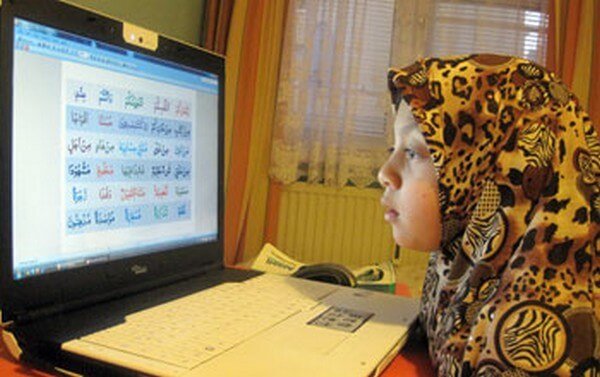
Live Interactive Sessions: Connect with qualified Arabic language experts through our user-friendly online platform. Our instructors use systematic grammar instruction, practical Quranic examples, and interactive exercises to make learning Arabic structured, clear, and directly applicable to Islamic studies.
Qualified Native Arabic Instructors: All our Arabic teachers are native speakers with formal training in Arabic grammar and pedagogy. They possess not only linguistic expertise but also years of teaching experience with students learning Arabic specifically for Quranic and Islamic purposes.
Flexible Scheduling: We understand that life can be busy. That’s why we offer flexible class timings that work around your schedule, whether you’re a student, a working professional, or a busy parent.
Progress Tracking: Regular assessments help monitor your advancement through the course. Your instructor will provide detailed feedback and customize lessons based on your strengths and areas needing improvement.
Embark on your journey to understand the language of revelation. Our dedicated team of instructors is ready to guide you through every step of this blessed endeavor. Whether your goal is to understand the Quran directly, read Hadith in Arabic, or pursue advanced Islamic studies, we’re here to support you.
May Allah make this journey easy and rewarding for you, and may this knowledge become a source of blessing in this life and the next.
Lorem ipsum dolor sit a adipisc elit cras vitae semper eleifeneu leo phasellus finibus.







Quranic Arabic (classical or Fusha Arabic) differs significantly from modern dialects in grammar, vocabulary, and structure. Modern spoken dialects like Egyptian, Levantine, or Gulf Arabic are simplified and have incorporated foreign words, while classical Arabic maintains the complex grammatical system of the Quran. Our course focuses on classical Arabic because that's the language of Islamic texts. While learning classical Arabic won't make you fluent in Cairo or Damascus, it gives you the tools to understand the Quran, Hadith, Fiqh books, and all traditional Islamic literature directly.
Achieving basic comprehension where you can follow the general meaning of Quranic verses typically takes 12-18 months of consistent study. After 2-3 years, many students can read Islamic texts with dictionary assistance and understand much of the Quran's vocabulary and structure. Full fluency in analyzing complex grammatical constructions and literary devices takes longer, often 3-5 years. The timeline depends on your dedication, practice frequency, and whether you're studying Arabic exclusively or alongside other Islamic subjects. The journey is gradual but incredibly rewarding.
We cover essential Arabic grammar including the Arabic alphabet and letter forms, Vowel marks (Harakat) and pronunciation rules, Nouns (Ism): types, genders, numbers, cases, Verbs (Fi'l): conjugation patterns, tenses, moods, Particles (Harf): prepositions, conjunctions, interrogatives, Sentence structure (Jumlah Ismiyyah and Jumlah Fi'liyyah), and Common morphological patterns (Sarf). The instruction is practical and Quran-focused, using actual verses as examples rather than abstract exercises. You'll learn grammar in service of understanding Islamic texts, not as an academic exercise.
No prior knowledge is required! We start from the absolute beginning with alphabet recognition and basic pronunciation. If you can already read the Quran (even without understanding), you have a head start, but even complete beginners can excel. Many students who've never studied a foreign language successfully learn Arabic through our systematic approach. Your instructor will assess your level in the first session and design a curriculum that starts exactly where you are, whether that's learning to recognize letters or tackling your first grammar rules.
Absolutely, and we highly recommend it! Many students study Basic Arabic alongside courses like Tafseer, Fiqh, or Hadith studies. Learning Arabic while simultaneously studying Islamic content in translation creates powerful synergy. You begin recognizing the Arabic terms and structures you're learning in your other courses, which reinforces both. Some students also combine Arabic with Quran memorization. Your instructors from different courses can coordinate to ensure the workload is manageable. Most students find that Arabic knowledge makes all their other Islamic studies more meaningful and rewarding.